Sun, Oxidation, and Fading: How Ceramic Coating Helps Preserve Your Paint
You've seen it happen. A car that looked brilliant five years ago now has paint that's faded, chalky, and lifeless. The color that once had depth now looks flat. The clear coat that once reflected light cleanly now scatters it dully in every direction.
That's sun damage doing its work. And if you park outside, live in a sunny region, or just plan to keep your car for more than a few years, it's going to happen to your paint too. Unless you do something about it.
Understanding does ceramic coating protect paint from sun damage matters because this is one of the coating's most practical benefits. It's not about making your car shinier for a week. It's about keeping your paint looking right for years while the elements try to break it down.
At A&G Auto Spa, we talk to owners all the time who've watched previous cars fade and want this one to be different. Let's look at what actually happens to paint in the sun and how coating helps address it.
What the Sun Actually Does to Your Paint
Before we get into protection, it helps to understand the problem. Sunlight isn't just bright. It carries energy that actively breaks down your paint over time.
The troublemaker is ultraviolet radiation. UV light doesn't just sit on your paint. It penetrates the clear coat and interacts with the molecules in your finish. Over time, this interaction breaks chemical bonds in the paint structure. The pigments that give your car its color start to degrade. The clear coat that gives it gloss starts to fail.
This process is called photodegradation, and it's happening every time your car sits in sunlight. The damage is cumulative. Each sunny day adds a little more degradation. You don't notice it day to day, but over years, the effect becomes visible.
First comes fading. The color loses its vibrancy. Reds become pink. Blacks turn gray. Blues wash out. The paint still covers the metal, but it doesn't look like it used to.
Then comes oxidation. The clear coat becomes chalky and rough. Instead of reflecting light cleanly, it scatters light in all directions. That's why oxidized paint looks dull even after washing. The surface itself has degraded.
How Ceramic Coating Provides UV Protection
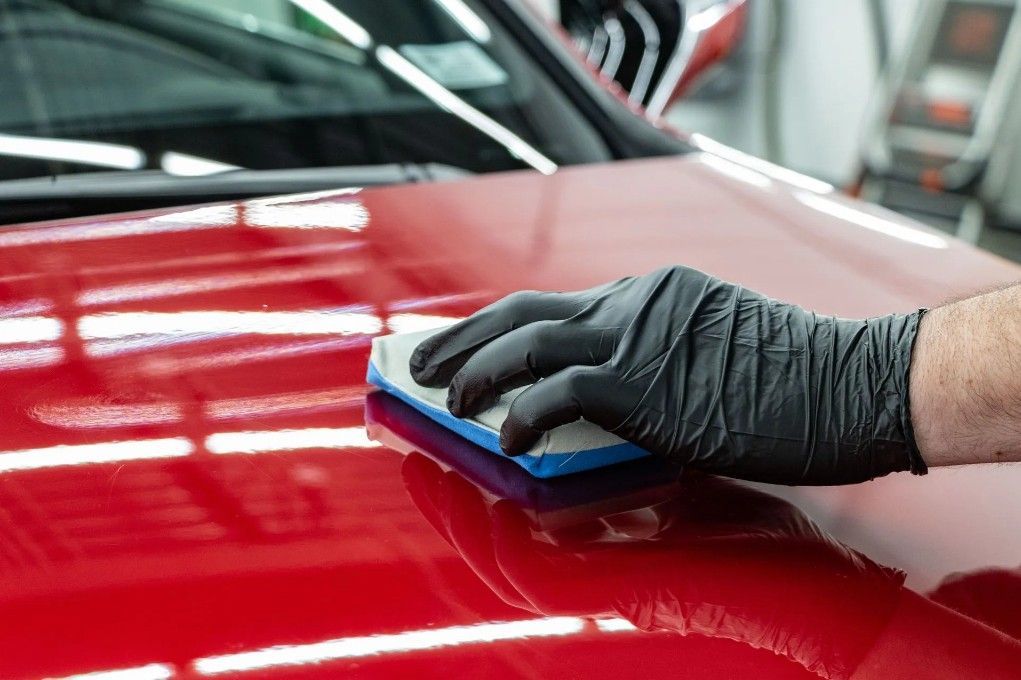
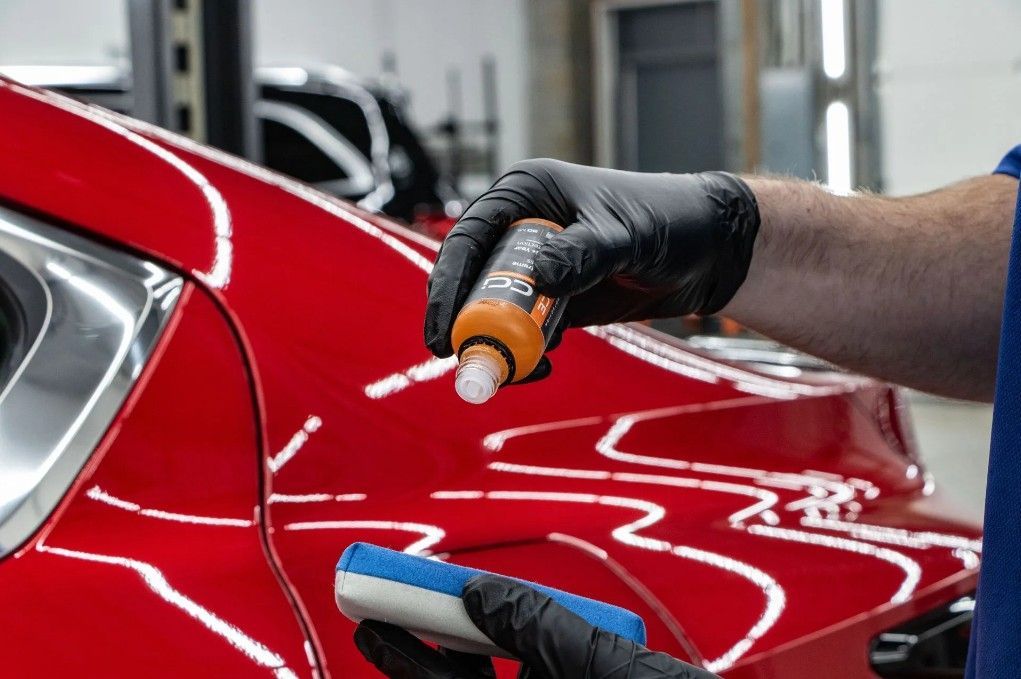
Here's where does ceramic coating protect paint from sun damage gets a clear answer. Ceramic coating creates a protective layer that absorbs UV radiation before it reaches your paint.
The coating sits on top of your clear coat as an additional barrier. When UV light hits your vehicle, it encounters the coating first. The coating absorbs that UV energy instead of letting it penetrate to your paint underneath. Your paint stays protected because the harmful radiation never reaches it.
Think of it like sunscreen for your car. Sunscreen doesn't make the sun disappear. It blocks the harmful rays from reaching your skin. Ceramic coating works the same way. The sun still shines on your car. But the damaging UV component gets absorbed by the coating rather than attacking your paint.
This UV absorption is built into the coating's chemistry. The silicon dioxide and other compounds in quality ceramic coatings are specifically formulated to block UV wavelengths. It's not a side effect. It's an engineered purpose.
The Oxidation Connection
UV damage and oxidation go hand in hand. When UV light breaks down your clear coat, it opens the door for oxidation to accelerate.
Oxidation is essentially a chemical reaction between your paint and oxygen in the air. A healthy clear coat resists this reaction. But as UV damage weakens the clear coat, oxygen penetrates more easily. The oxidation process speeds up. The chalky, dull appearance develops faster.
Ceramic coating interrupts this cycle at the source. By blocking UV radiation, the coating prevents the clear coat degradation that enables rapid oxidation. Your paint's natural defenses stay intact longer because they're not being constantly weakened by sun exposure.
This matters particularly for owners who park outside regularly. Every day in the sun is a day of UV bombardment. Without protection, that bombardment gradually erodes your finish. With coating protection, the bombardment hits the coating instead of your vulnerable paint.
Real World Protection for Real Parking Situations
Let's talk about does ceramic coating protect paint from sun damage in practical terms.
If you park in a garage every night and work from home, your sun exposure is limited. The protection coating provides is nice but maybe not critical for you.
But most people don't live that way. Most people park outside at work. They park outside at the grocery store, the gym, restaurants, everywhere they go. Their cars sit in direct sun for hours every day, accumulating UV exposure constantly.
For these owners, coating protection provides genuine value. The parking lot at work becomes less of a threat. The outdoor spot at home becomes manageable. You're not watching your paint slowly cook every time you leave the car somewhere sunny.
This protection matters even more in certain locations. Arizona, Texas, Florida, California. Places where the sun is intense and the UV index stays high most of the year. Paint in these regions degrades faster than paint in cloudy northern climates. The protective coating provides becomes proportionally more valuable.
What Coating Does and Does Not Do
Being honest about does ceramic coating protect paint from sun damage means acknowledging limits along with benefits.
Ceramic coating significantly reduces UV damage. It provides meaningful, measurable protection against the sun's harmful effects. Your paint fades slower. Oxidation develops slower. The finish holds its appearance longer than unprotected paint in equivalent conditions.
But coating doesn't make your paint immortal. Extended sun exposure over many years will eventually affect any finish, protected or not. Coating buys you time and preservation. It doesn't stop physics entirely.
The coating itself can degrade over time, particularly under intense sun exposure. As the coating ages, its UV-blocking capability may gradually diminish. This is why maintenance matters and why some owners refresh their coating periodically.
Coating also doesn't reverse existing damage. If your paint is already faded and oxidized, coating won't restore it. Paint correction addresses existing damage. Coating protects against future damage. The two work together but serve different purposes.
The Color Preservation Benefit
One of the most appreciated aspects of UV protection is color preservation. The color you paid for stays the color you have.
Paint colors fade at different rates. Reds and blacks tend to show sun damage first. Lighter colors may hide it longer but still degrade. Any color loses its original vibrancy when UV breaks down the pigments.
With coating protection, your red stays red longer. Your black maintains its depth. Whatever color made you choose this car keeps looking like that color instead of gradually shifting toward something duller and less appealing.
This matters for how you feel about your car over time. A vehicle that still has its original color depth feels newer, more cared for, more worth keeping. A faded car feels old regardless of its actual age or mechanical condition.
Protecting Your Investment Value
Paint condition affects resale value directly. Buyers notice faded, oxidized finishes. They associate that appearance with neglected vehicles. Even if everything mechanical is perfect, tired paint creates negative impressions.
Coating protection helps maintain the appearance that supports your car's value. When you eventually sell or trade, the paint still looks good. Buyers see a well-maintained vehicle. The impression is positive rather than concerning.
This isn't about making claims of specific value retention. It's simply acknowledging that appearance affects perception, and protection maintains appearance. Better maintained paint supports better resale outcomes.
Complementing Good Habits
Coating works best as part of sensible overall care. It's protection, not magic.
Parking in shade when available still helps. Garage parking at home still reduces exposure. Regular washing removes contaminants that can accelerate damage. Professional detailing maintains the coating surface and addresses issues early.
Coating makes good habits more effective. It doesn't replace them entirely. Think of it as force multiplication. Your reasonable care efforts produce better results because they're working alongside engineered protection rather than trying to preserve completely exposed paint.
Why This Benefit Matters Most for Long-Term Owners
If you trade cars every two years, sun damage probably won't catch up to you. The paint won't have time to degrade noticeably. Protection matters less when your ownership window is short.
But if you keep cars five years, seven years, ten years or more, sun damage becomes a real factor in your ownership experience. You'll watch the finish change over time. The question is whether that change happens quickly without protection or slowly with it.
Does ceramic coating protect paint from sun damage matter most to owners playing the long game? Those who plan to keep their vehicles and want them looking good throughout extended ownership. Those who've seen what the sun does to unprotected paint and want a different outcome this time.
Preserve Your Finish
Sun damage is inevitable for unprotected paint. The fading, oxidation, and dulling you've seen on other cars will happen to yours too, given enough time and exposure. But coating protection genuinely reduces this damage and extends the life of your finish's appearance.
The protection is real. The benefits are practical. And for owners who park outside and keep cars for years, the value is substantial.
Talk Protection Options
Ready to protect your paint from the sun? Contact A&G Auto Spa to discuss ceramic coating options for your vehicle. We'll look at your situation, explain what protection delivers in your specific circumstances, and help you make an informed decision about preserving your finish for the long term.
Frequently Asked Questions
How much UV protection does ceramic coating actually provide?
Quality ceramic coatings block a significant portion of UV radiation reaching your paint. The exact percentage varies by product formulation and coating quality. Rather than focusing on specific numbers that vary between manufacturers, understand that does ceramic coating protect paint from sun damage has a clear yes answer. The protection is meaningful and measurable, reducing the UV exposure your paint actually receives compared to unprotected surfaces.
Will ceramic coating prevent all fading on my car?
Coating significantly slows fading by blocking UV radiation, but it doesn't prevent all effects indefinitely. Over very long timeframes with intense sun exposure, some color change may eventually occur even with protection. What coating provides is dramatically extended preservation. Your paint fades slower, maintains its appearance longer, and looks better over the ownership period than equivalent unprotected paint would. That's substantial practical value even if it isn't absolute immunity.
Does the coating itself get damaged by sun exposure?
Ceramic coating is engineered for durability, but like any protective layer, it experiences some degradation over extended periods. Years of intense UV exposure can gradually reduce the coating's effectiveness. This is why periodic maintenance and eventual reapplication may be appropriate for maximum long term protection. The coating takes the UV damage so your paint doesn't have to. That's exactly how it's supposed to work.
Is ceramic coating worth it if I already park in a garage?
Garage parking reduces but doesn't eliminate sun exposure. Your car still encounters UV during every drive and every outdoor parking situation. Does ceramic coating protect paint from sun damage remain relevant even for garage-parked vehicles, though the urgency may be lower? Coating also provides benefits such as easier cleaning and hydrophobic properties that matter regardless of the parking situation. Evaluate based on your full usage pattern, not just where you park at home.
Can ceramic coating be applied to already faded paint?
Coating protects paint in its current condition. It won't reverse existing fade or oxidation damage. If your paint is already degraded, paint correction should come first to restore the finish before coating seals it in. Applying coating over damaged paint just preserves the damage. The proper sequence is correction first to restore appearance, then coating to protect that restored finish from future sun damage.